UNIST site map
- Admissions
-
Academics
- Colleges and Schools
-
Academic Affairs
- Academic Calendar
- Academic Curriculum
- Requirements for Graduation
- Browse Open Courses
- Undergraduate Administration
-
Graduate Academic Affairs
- Tuition Fee Payment
- Academic Leave of Absence/ Academic Return
- Voluntary Withdrawal/ Expulsion
- Change of Major
- Change of Degree Program/ Dropping of Degree Program
- Class Period/ Attendance Period/ Academic Year・Semester
- Course Registration
- Course Drop
- Attendance/ Grade/ Exam
- Credit Transfer/ Credit Carryover
- Academic Forms
- Education Support
-
Research/Industry
- Research Aims
- Research Findings
- Researcher Search
-
Research Organizations
- UNIST Multi-Interdisciplinary Institute
- IBS Research Groups
-
UNIST Labs
- Department of Mechanical Engineering
- School of Energy and Chemical Engineering
- Department of Civil
- Department of Materials Science and Engineering
- Department of Nuclear Engineering
- Department of Industrial Engineering
- Department of Design
- Department of Biomedical Engineering
- Department of Biological Sciences
- Department of Electrical Engineering
- Department of Computer Science and Engineering
- Department of Mathematical Sciences
- Department of Chemistry
- Department of Physics
- School of Business Administration
- Graduate School of Carbon Neutrality
- Graduate School of Artificial Intelligence
- Research Support
- University-Industry Relations
- Campus Life
- News Center
- About UNIST
-
etc
- UNIST Bulletin
- Work-Life Balance Support System
- UNIST Gender Equality Plan
- Faculty Invitation for Tenure Track
- Faculty Invitation for Non-Tenure Track
- Board Meeting Minutes
- University Council Meeting Minutes
- Administrative Service Charter
- Privacy Policy
- Copyright Policy
- Rejection of Unauthorized Email Collection
- Operation and Management Policy for Video Information Processing Devices
- Information Disclosure


Connection Points of Knowledge, Everything About UNIST
Try searching.
Recommended search terms


- portal
- U Academics Innovation Center
- Leadership Center
- Dormitory
- Academic Information Center
- International Students Support
- Browse Open Courses
- Course Registration
- Graduation Requirements for Graduation
- Academic Leave of Absence/ Academic Return
- Military Service
- Certificate Issuance
- Academic Calendar
- Scholarships
- Campus Map
- Campus Life Guidebook
- Health Care Center
- Human Rights Center
- portal
- Job Opening
- Announcement for Bid
- UNIST AI Services
- UNIST Daycare Center
- Sports Center
- UI Downloads
- Announcement
- Recruitment of Professors (Non-tenure)
- Faculty Invitation for Tenure Track
- UNIST Academic Information Center
- Office of Research Facilities and Training
- Office of Research Affairs
- Rule Management System
- Academic Calendar


This is a collection of menus necessary for UNIST students .
students
- portal
- U Academics Innovation Center
- Leadership Center
- Dormitory
- Academic Information Center
- International Students Support
- Browse Open Courses
- Course Registration
- Graduation Requirements for Graduation
- Academic Leave of Absence/ Academic Return
- Military Service
- Certificate Issuance
- Academic Calendar
- Scholarships
- Campus Map
- Campus Life Guidebook
- Health Care Center
- Human Rights Center


This is a collection of menus necessary for prospective UNIST Students .
prospective Students


This is a collection of menus necessary for UNIST Faculty & Staff .
Faculty & Staff
- portal
- Job Opening
- Announcement for Bid
- UNIST AI Services
- UNIST Daycare Center
- Sports Center
- UI Downloads
- Announcement
- Recruitment of Professors (Non-tenure)
- Faculty Invitation for Tenure Track
- UNIST Academic Information Center
- Office of Research Facilities and Training
- Office of Research Affairs
- Rule Management System
- Academic Calendar

NEWS CENTER
Discover not only Research Findings and event news, but also the diverse facets of UNIST presented by reporters and writers.
News Center

UNIST News
UNIST Reusable Cup Service Wins 2026 iF Design Award
CampusCup turns a local waste-reduction project into a scalable model for university sustainability.
- News
- JooHyeon Heo
- 2026.05.22
- 276
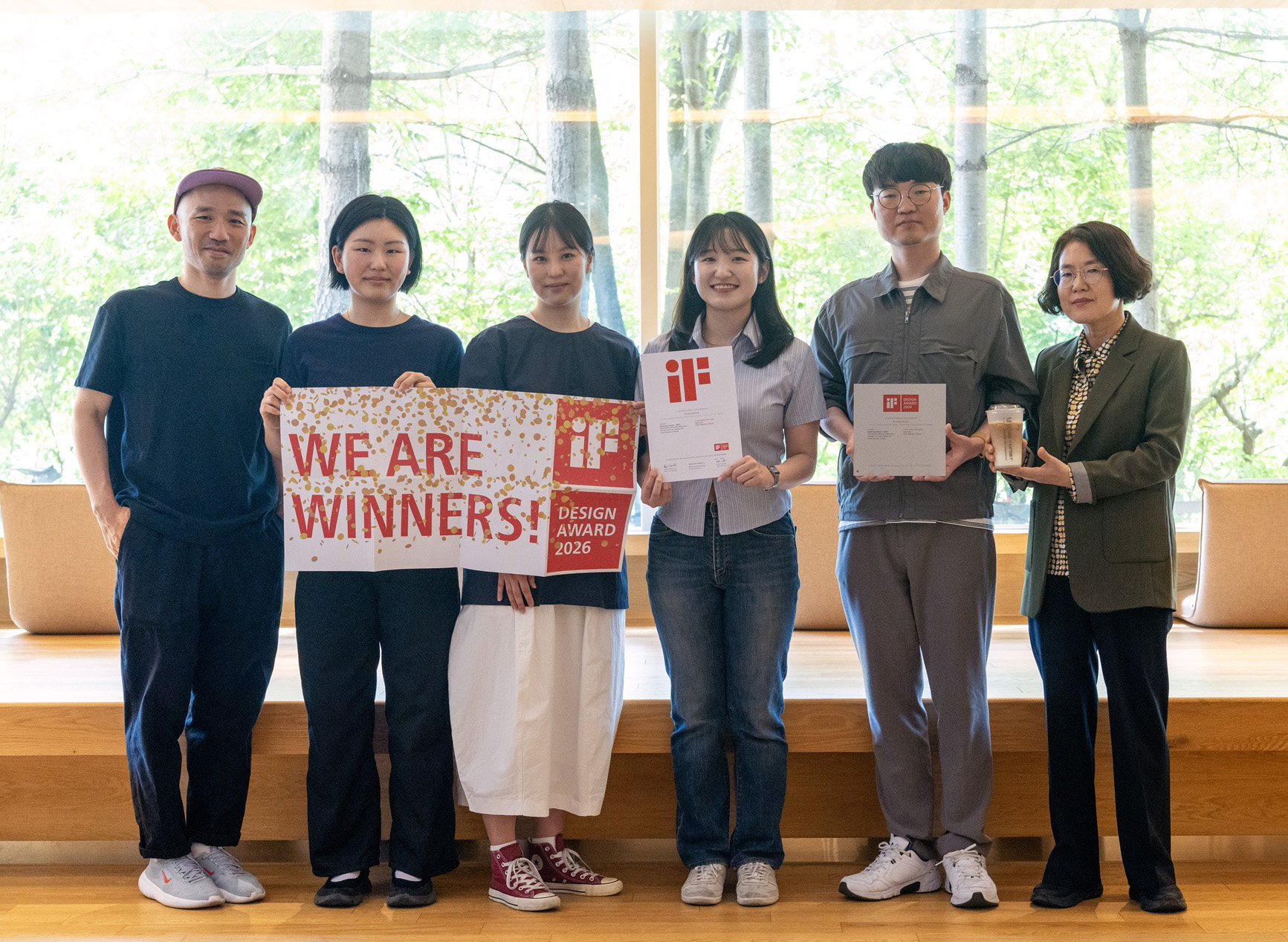
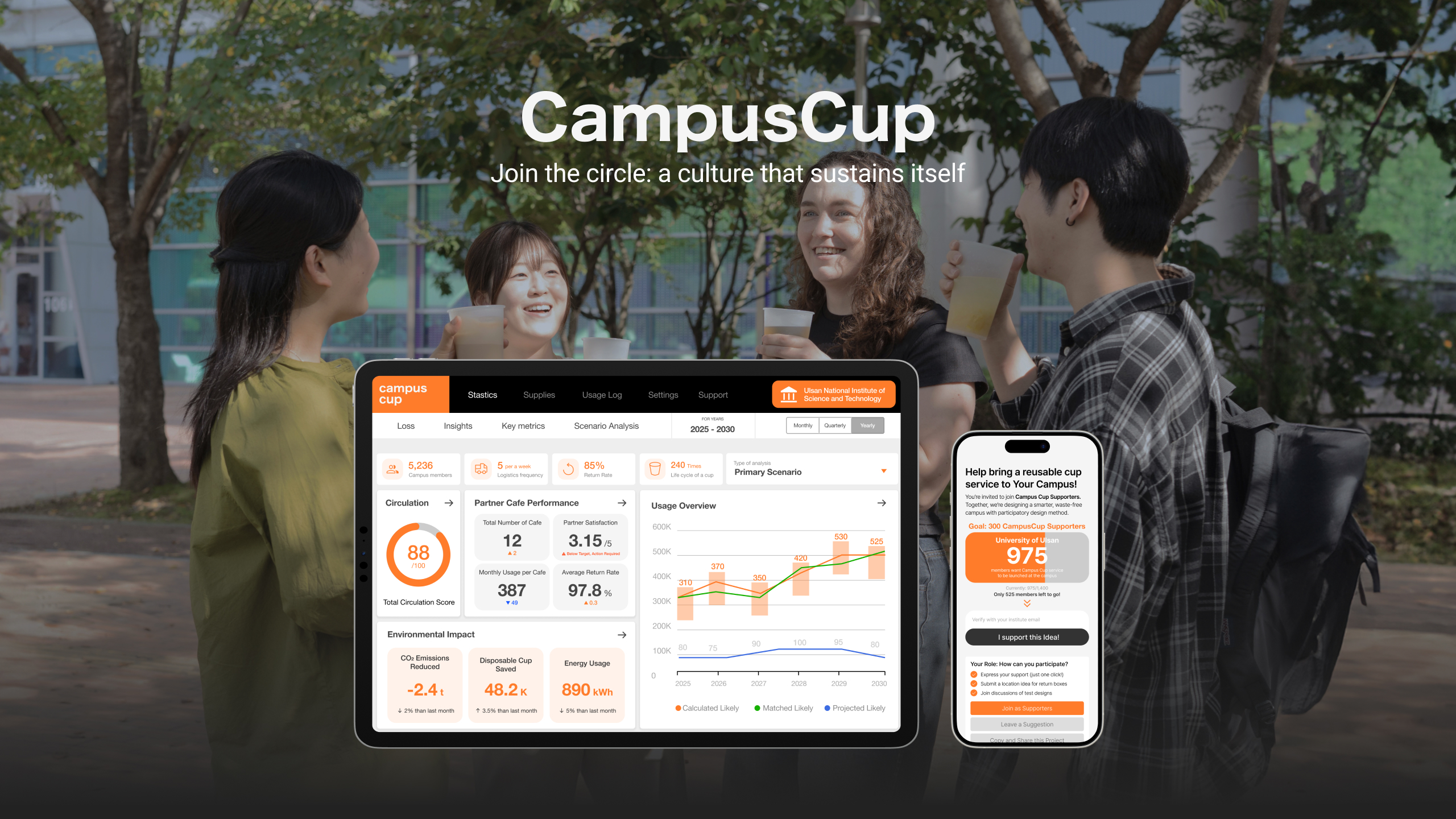
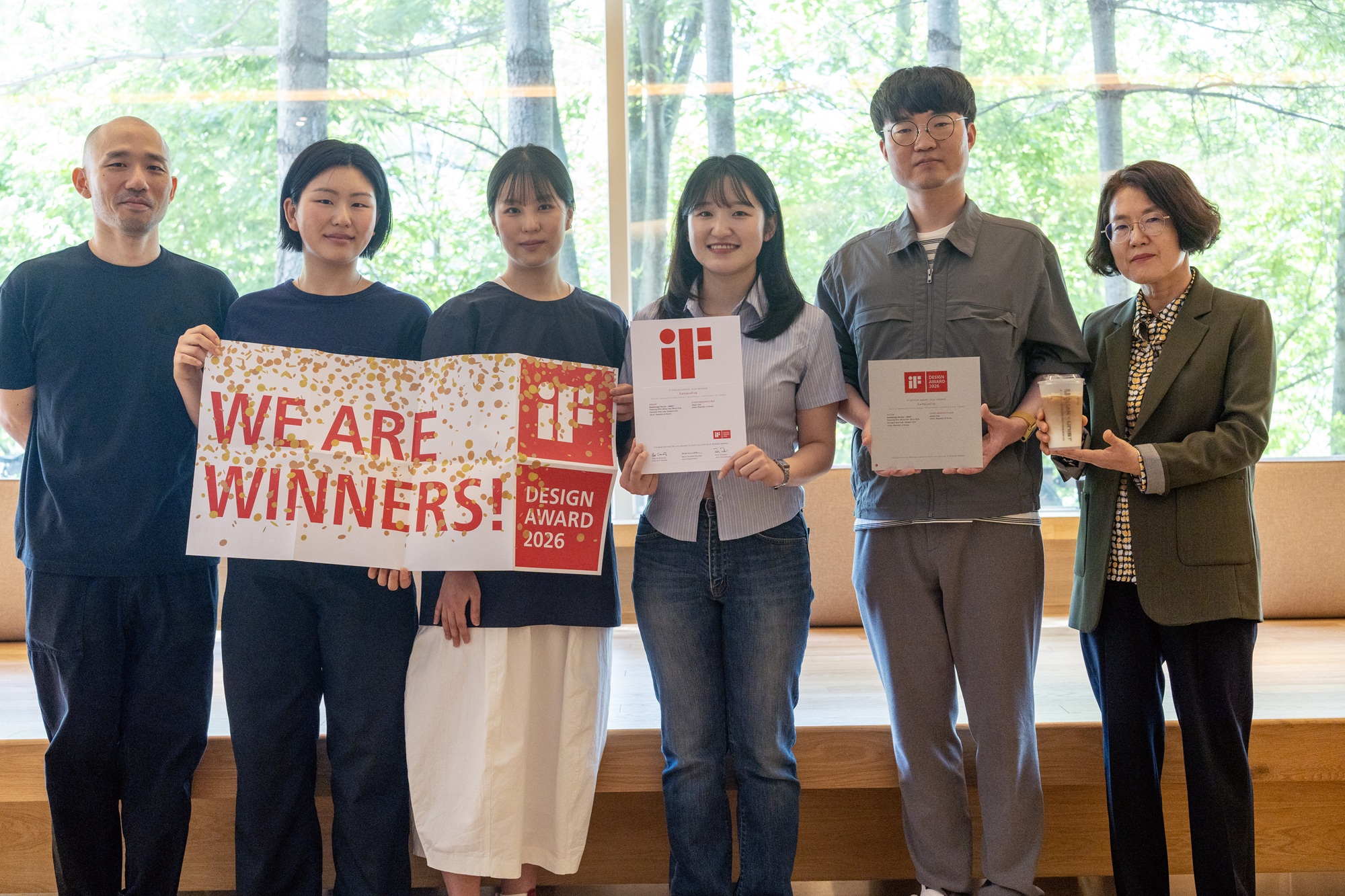
A participatory reusable cup circulation platform developed at UNIST has received a 2026 iF Design Award , one of the world's most respected design honors.
The award-winning service platform, CampusCup, was created by UNIST's Department of Design, in partnership with the Resource Circulation Division of Ulsan Metropolitan City . The initiative builds on UlsanCup , a reusable cup program now operating at cafés across Ulsan and the UNIST campus. Together, the projects have helped eliminate the use of more than 36,000 disposable cups to date.
Led by Professor Seungho Park-Lee of the Department of Design, the project involved student researchers Dayoung Shin, Minju Park, Minju Han, and Taegeun Kim, who also worked on the original UlsanCup initiative.
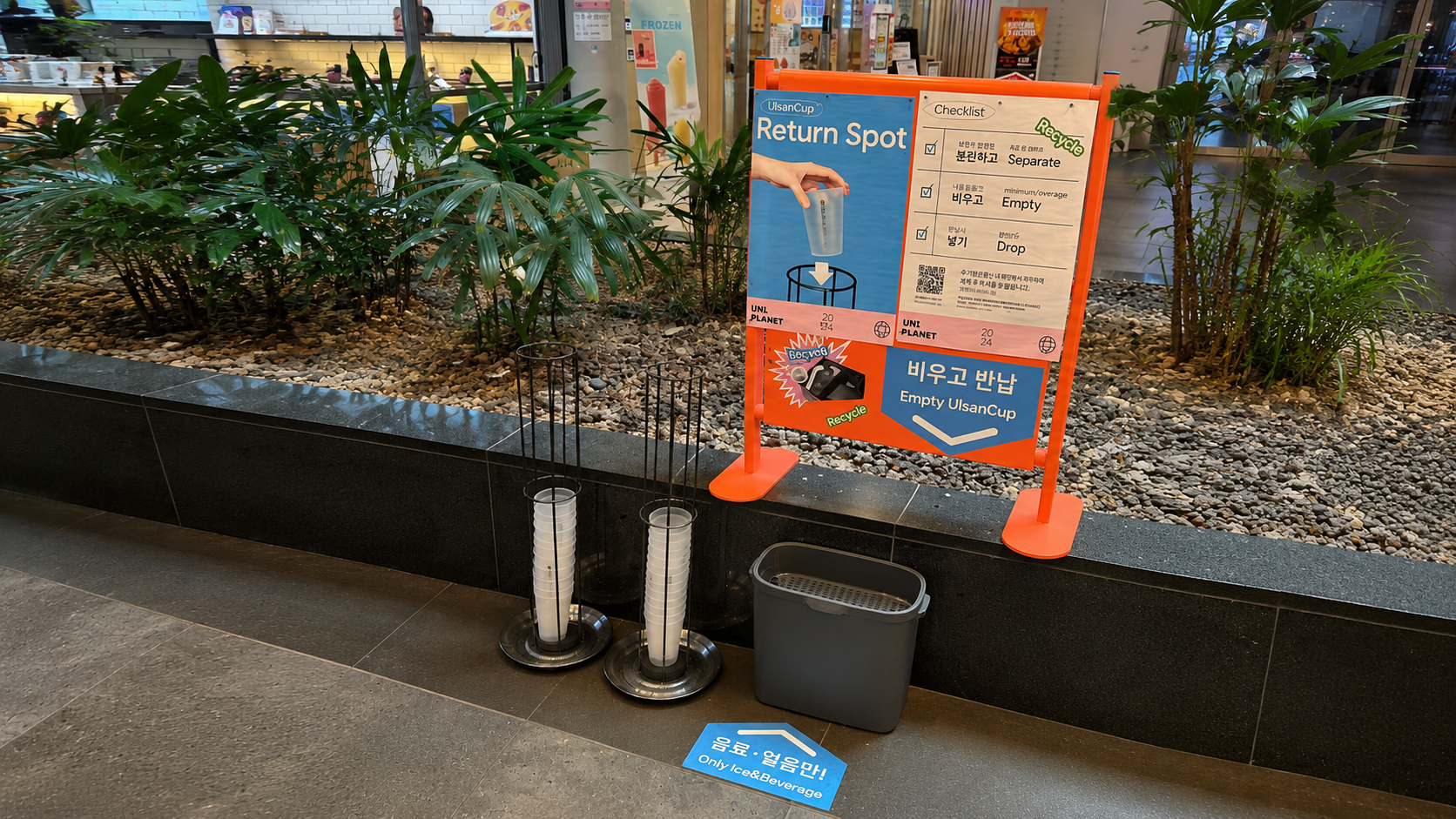
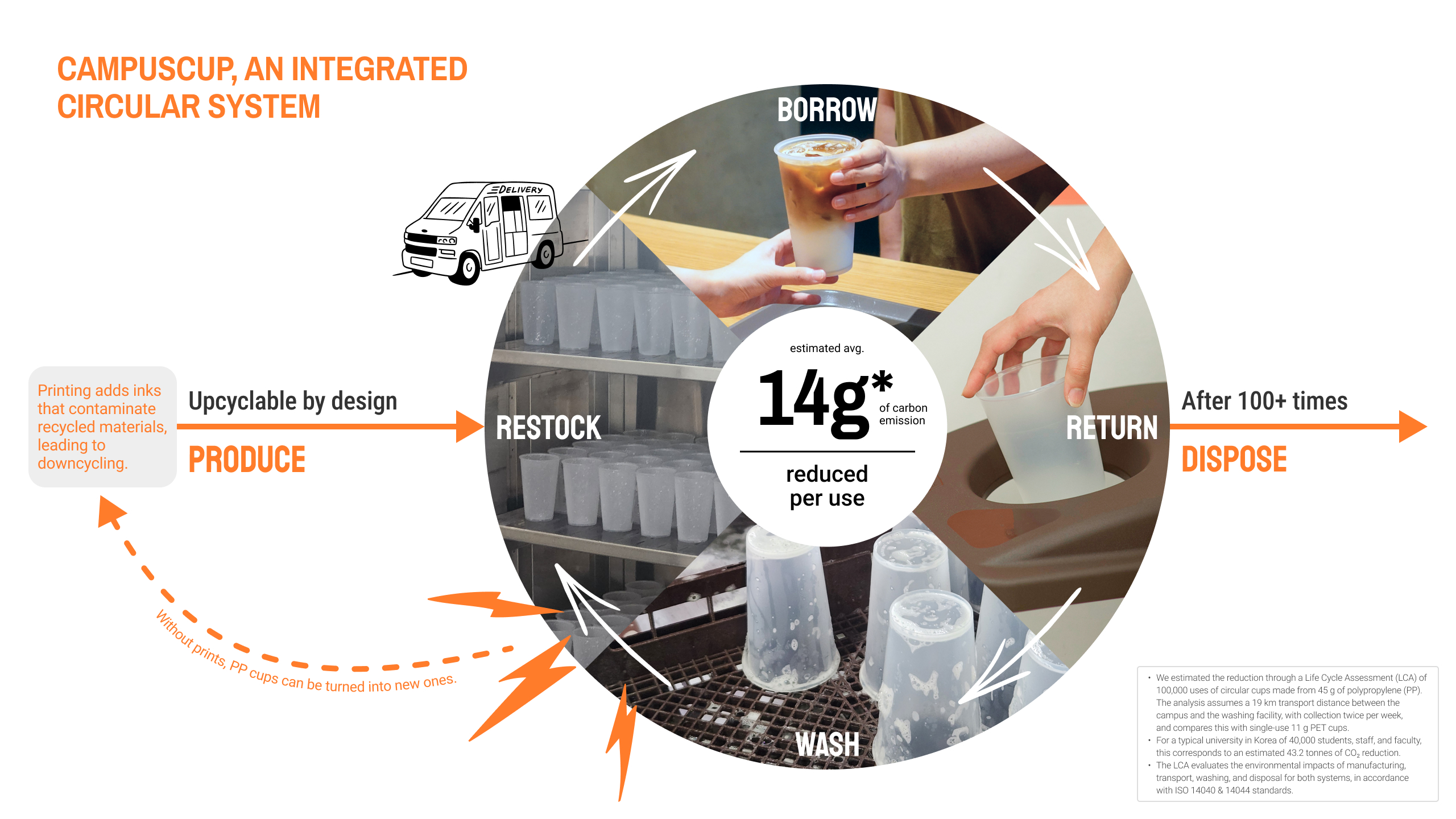
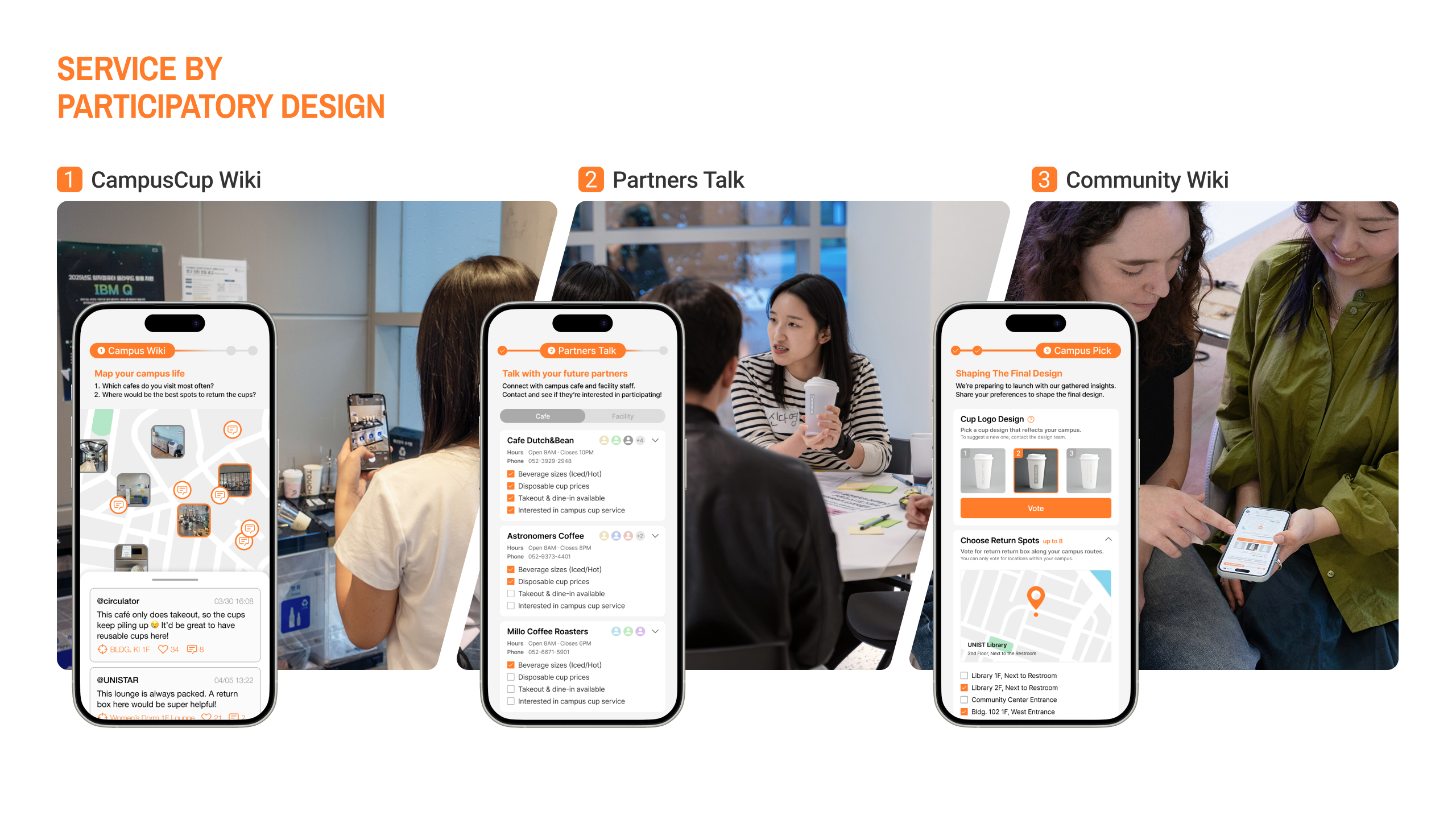
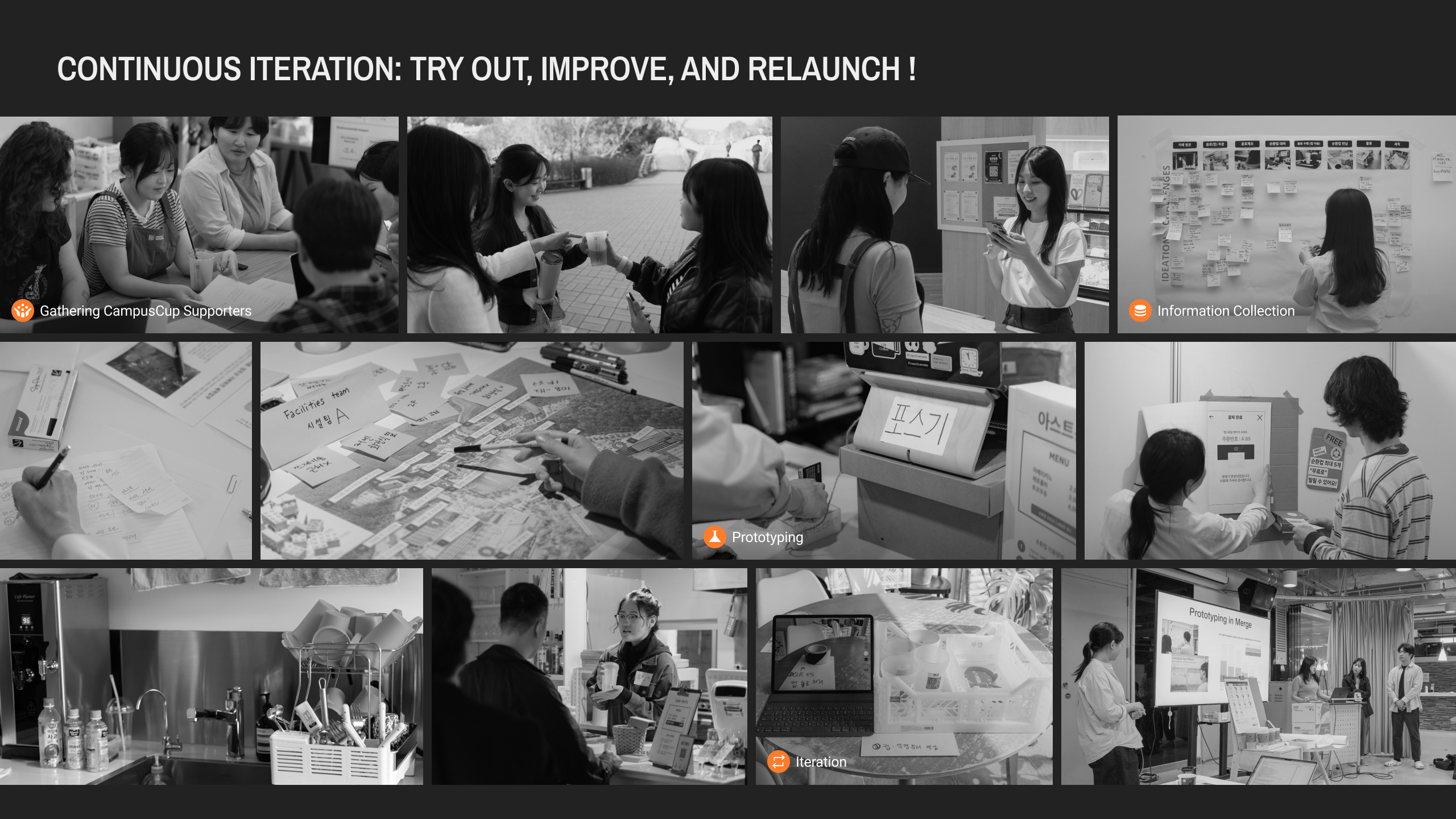
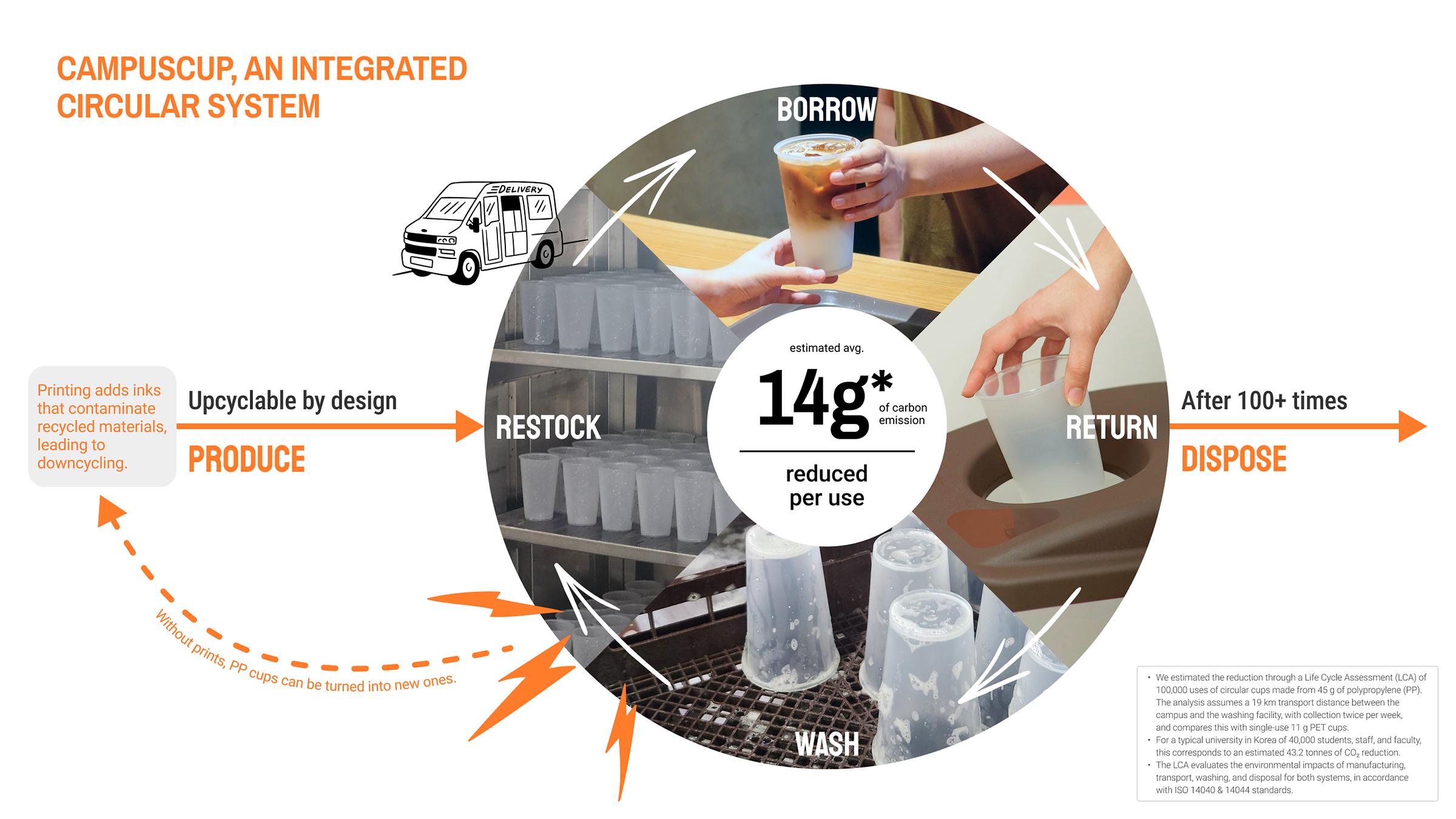
Disposable cups remain one of the most visible forms of single-use plastic waste, especially in cafés and fast-food restaurants. CampusCup tackles that problem by making reuse easier to adopt and easier to sustain. The team designed the service around the everyday habits of campus users, refining how cups are borrowed, returned, tracked, and reused.
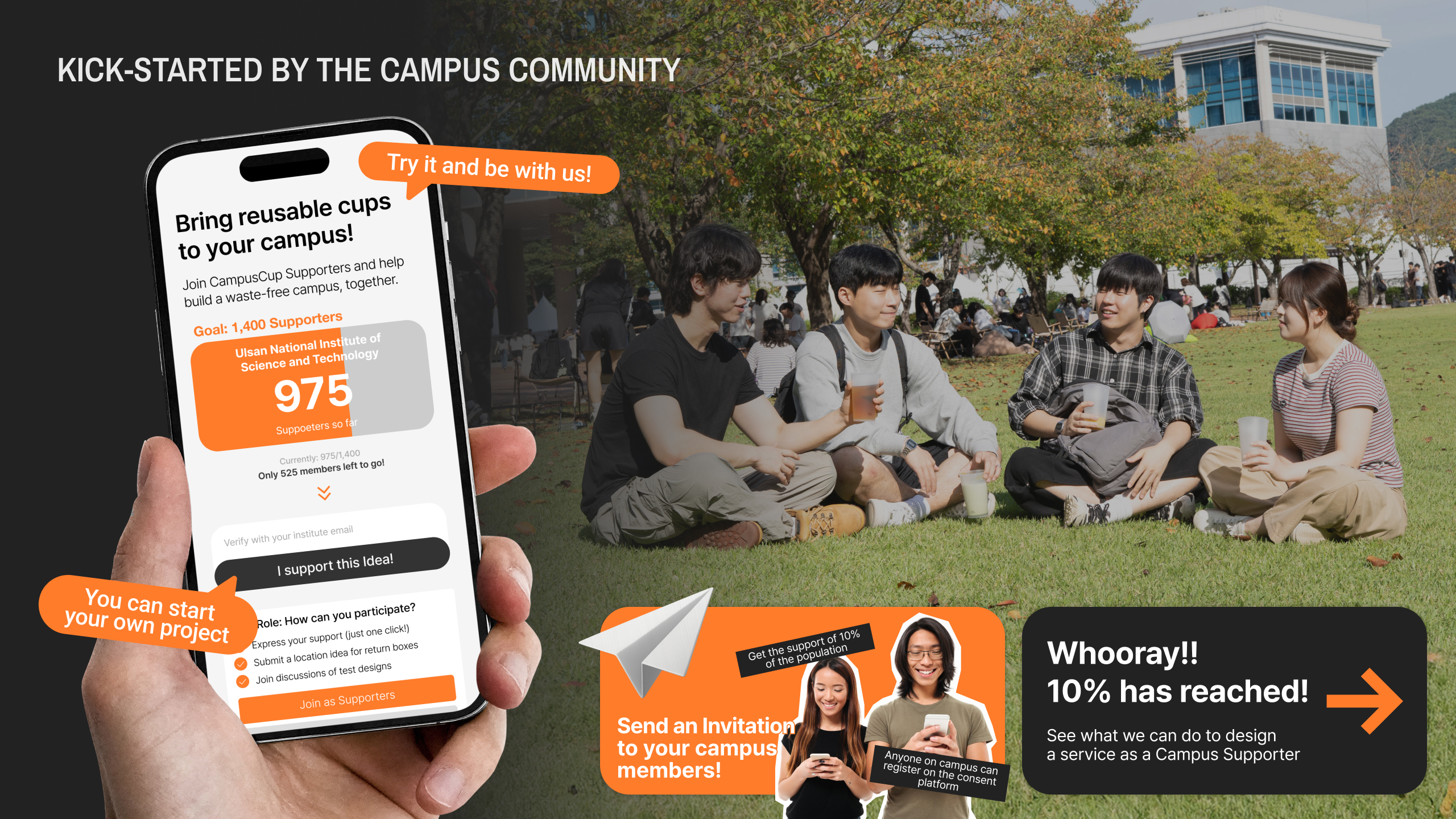
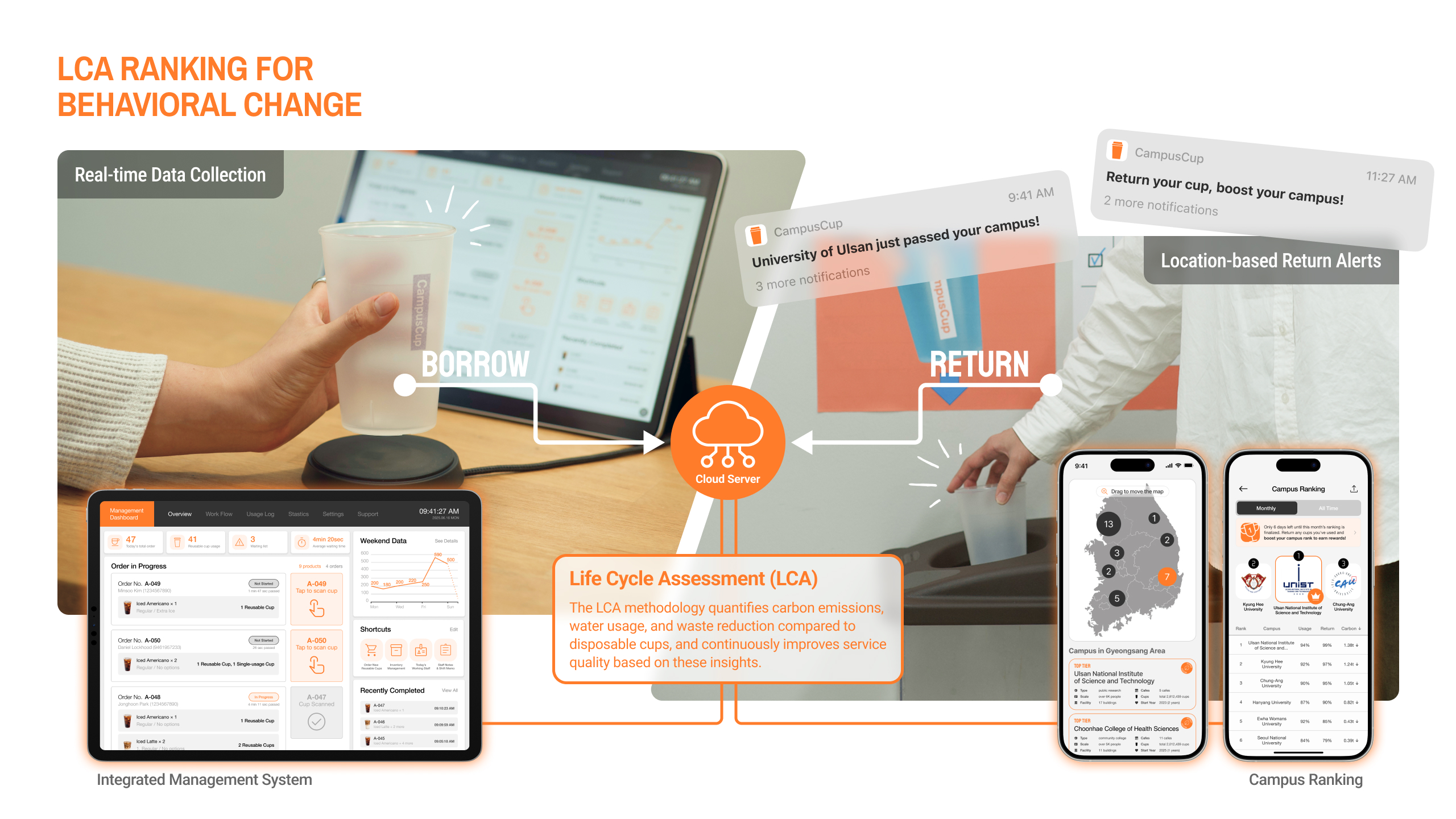
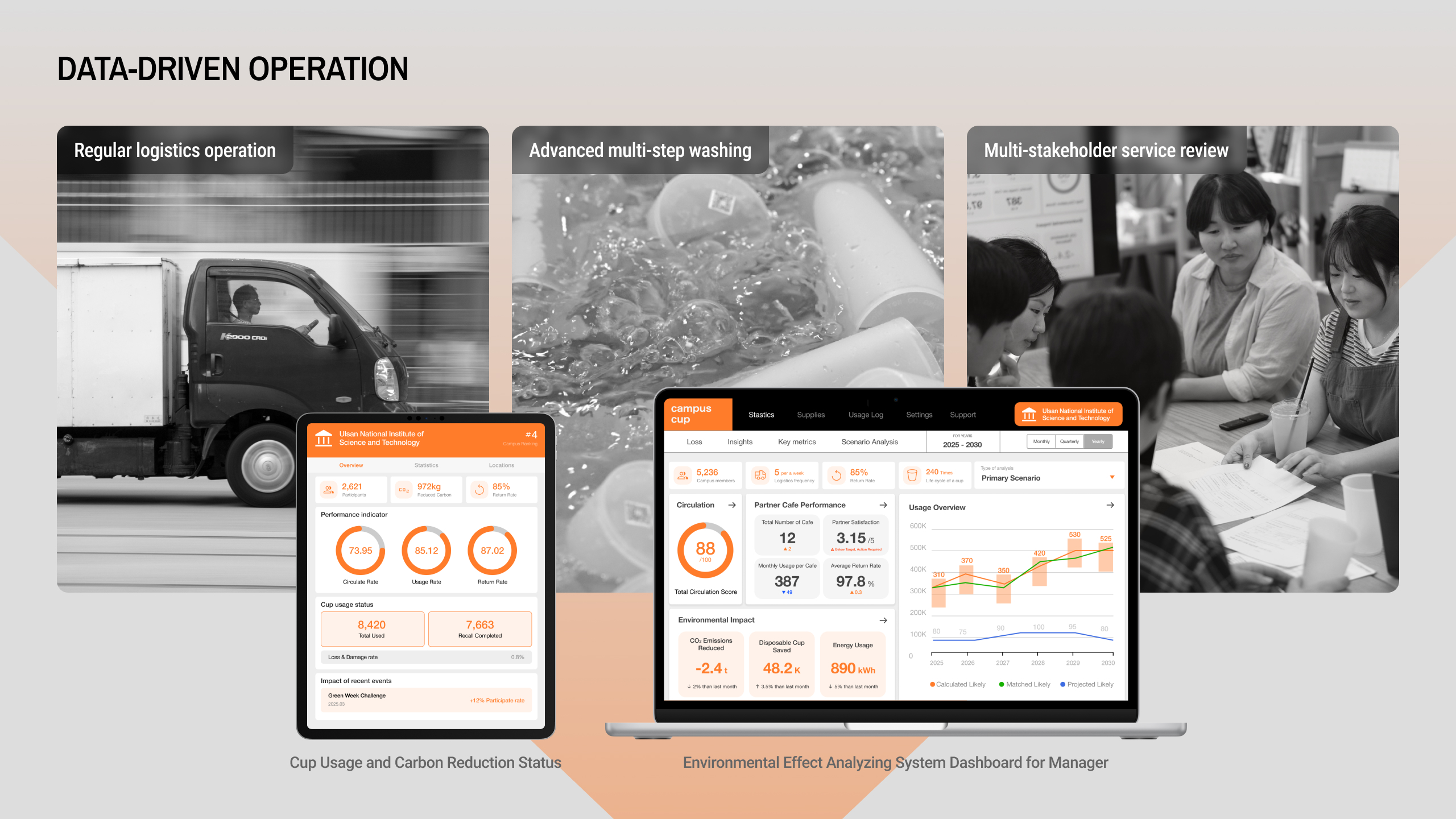
The system includes simple return routes, deposit and incentive options, and service features that encourage voluntary participation. It also uses life cycle assessment data to measure environmental impact, including reductions in waste and carbon emissions. This allows universities and local governments to move beyond symbolic sustainability campaigns and make decisions based on evidence.
The iF Design Award, founded in Germany, recognizes design that combines quality, usability, sustainability, and social value. CampusCup was recognized not only as a service design but as a practical system that can help campuses reduce waste at scale.
The model is already drawing attention beyond UNIST. With possible expansion to nearby institutions, including the University of Ulsan (U of U) and Choonhae College of Health Sciences, CampusCup shows how a locally tested service can grow into a broader university resource-circulation model.
“Through this project, we saw that design is not only about shaping objects, but about changing habits and everyday systems,” said Dayoung Shin, a student researcher on the project. “Working on a real service helped us understand more deeply how design can respond to social and environmental challenges.”
An official from Ulsan Metropolitan City said the project shows the value of connecting public policy with design that works in daily life. “UlsanCup has shown that resource circulation can work when policy, design, and citizen participation move together,” the official said. “With Campus Cup receiving international recognition, we hope this model can become more refined and spread across university campuses.”
Professor Lee said the award reflects the strength of design education rooted in real-world problems. He further noted, “This project allowed students to address a real social issue and design a system that people can actually use. We will continue to work with public partners to develop sustainable services and policy models that can create lasting change.”
The project grew out of the Brain to Society (BTS) Project-based Learning Program, jointly operated by UNIST and the U of U. It later advanced through the Digital Convergence Design Talent Development Project, supported by the Ministry of Trade, Industry and Energy (MOTIE), the Korea Institute for Advancement of Technology (KIAT), and the Korea Institute of Design Promotion (KIDP).
CampusCup also builds on outcomes from the 2023 Community Problem-Solving Project through Science and Technology , supported by the Ministry of Science and ICT (MSIT), the Ministry of the Interior and Safety (MOIS), and the Ulsan Metropolitan City.
Related Links
Related Photo